

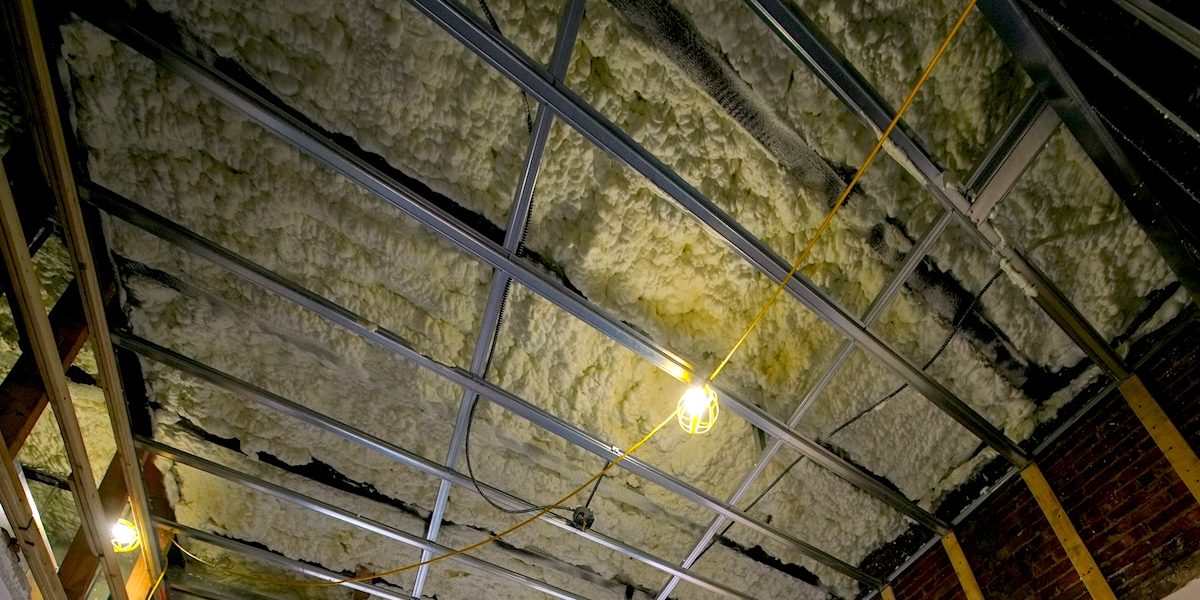
Having worked with a variety of different mold issues over the years, we tend to see a few mold problems with spray foam insulation in homes more often than most people expect. Homeowners often choose spray foam in attics, ceilings, and walls because it seals gaps tightly and helps to lower their energy costs. That tight seal works well in many cases, but when moisture gets trapped inside, it creates conditions that allow mold to take hold and spread.
Fixing the issues associated with mold and spray foam is rarely simple. You can’t just spray some cleaner on it and call it good and done. The foam often has to be cut out in sections so the moldy material underneath it can be removed. Then the affected area needs to be completed dried out before any new insulation goes back in. Plus, skipping any of those steps usually means the mold returns. Below is a better breakdown of the types of spray foam insulation used in homes, the mold problems they cause, along with how to remediate and prevent the issues.
How Spray Foam Can Trap Moisture
Spray foam comes in two main types. Open-cell foam is softer and allows some vapor to pass through. Closed-cell foam is denser and forms a stronger barrier. And both types can lead to trouble if the installation leaves gaps or if the house already has humidity issues.
Moisture that accumulates from daily activities or from outside air has nowhere to escape once the foam is in place. And, any warm indoor air that reaches a cool surface will turn into condensation. Then if that damp area stays wet long enough, mold can quickly start growing on wood, drywall, or even on the foam itself.
The Mold Risks: Open-Cell -vs- Closed-Cell Foam
Open-cell foam can absorb moisture more readily, which sometimes lets mold grow within the material. However, closed-cell foam resists water better but can hide problems behind it for longer periods. Either way, the key factor that remains is uncontrolled moisture.
The Most Common Mold Problems with Spray Foam
We regularly deal with several recurring mold problems in homes that are tied to spray foam insulation. Here’s a few to look out for.
Persistent Musty Odors
Musty odors that linger no matter how much the house is cleaned or ventilated rank as one of the most frequent complaints we encounter. The smell often comes from mold growing behind the foam where it can’t be seen.
Visible Surface Growth
Visible mold growth on walls, ceilings, or baseboards near insulated areas is another common issue. The growth may start out small but it’ll spread once moisture continues to build up inside it.
Elevated Indoor Humidity
High indoor humidity levels that stay elevated even with air conditioning running can signal trapped moisture. This creates an environment where the mold can thrive year-round.
Staining and Discoloration
Discoloration or staining on drywall and paint near foam-insulated sections will appear when moisture moves through the material and carries mold spores with it.
Health-Related Symptoms
Allergic reactions or respiratory irritation among people living in the home often show up as unexplained sneezing, coughing, wheezing, or congestion that improves when they leave the house.
Hidden Structural Damage
Structural damage such as soft or rotting wood framing underneath the spray foam is a more serious problem we uncover during our mold inspections. Once the wood stays damp for too long, the mold will weaken it considerably as time passes.
Trouble Spots in Attics and Basements
Attics cause particular concern too. Foam sprayed against the roof deck can seal in moisture from minor roof leaks or poor ventilation. The wood sheathing starts to deteriorate from the inside while the foam looks intact from below. Basements and crawl spaces present their own challenges. Closed-cell foam applied to foundation walls can hide ongoing water seepage. Mold develops between the foam and the concrete or on nearby framing before anyone notices the problem.
Why These Areas Are Vulnerable
Limited airflow in attics and basements will allow moisture to linger. Once spray foam seals up those spaces, drying it becomes much harder without an active intervention.
Spray Foam Installation Issues That Lead to Mold
Uneven coverage during installation leaves air pockets where condensation forms. Foam applied over damp surfaces traps existing moisture and mold right from the start. In humid weather, crews sometimes install foam without allowing materials to dry fully, setting up conditions for growth almost immediately.
Mold Remediation Details for Spray Foam Cases
Addressing the mold problems connected to spray foam requires a few careful steps because the insulation itself often has to be disturbed.
Initial Assessment and Moisture Mapping
The process begins with a thorough check of the affected areas. Moisture meters help locate damp spots behind the foam. Visual inspection and sometimes limited cutting of foam sections reveal how far the mold has spread. Identifying the moisture source is essential before any removal begins.
Safe Mold Removal of Contaminated Materials
The affected spray foam usually needs to be cut away in controlled sections. The goal is to reach the moldy wood, drywall, or framing underneath without spreading spores throughout the house. Containment barriers and proper filtration keep the work area isolated, while the contaminated materials are bagged up and removed carefully.
Cleaning and Treating The Remaining Surfaces
Once the foam is out of the way, remaining surfaces need to get cleaned. Non-porous materials can often be scrubbed and treated. Any porous materials like wood may need sanding or more extensive treatments if the mold has penetrated it deeply. The focus stays on removing the mold growth rather than just covering it up.
Completely Drying the Affected Area
Drying the affected area is a critical stage that cannot be rushed. Dehumidifiers and air movers will run until the moisture readings return back to normal levels. Skipping thorough the drying process almost always leads to mold returning once any new materials go in.
Restoration and Prevention Measures
After the area is cleaned up and dry, new insulation can be installed if it’s needed. Attention then turns to fixing the original moisture problem, whether that involves improving ventilation, repairing water leaks, or adjusting vapor barriers. Monitoring the indoor humidity levels afterward will help confirm the issue has been fixed.
Why Using Shortcuts Rarely Work
Attempting to treat mold without removing the foam or fully drying the space usually fails. The mold will remain protected behind the insulation and will continue to grow. Proper mold remediation takes time but reduces the chance of repeat problems.
Steps That Help Prevent These Mold Problems
Surfaces need to be clean and completely dry before any new spray foam goes in. Existing moisture problems should be fixed first and fast. Proper ventilation and vapor control still matter even with spray foam already in place. In some climates open-cell foam allows better drying potential, while closed-cell works better only when the area behind it is already dry and sound.
Spray foam performs well when moisture movement is fully considered during the process. The problems we tend to encounter most often happen when that side of the work gets overlooked. Unexplained odors, persistent humidity, or stains near insulated walls are signals worth checking early before the issue grows larger.
Is Your Spray Foam Insulation Causing Mold in Your Home?
It might be, especially if you smell a musty odor or other unpleasant smells. Furthermore, if you spot stains near the insulated ceilings or walls. If this is the case, you may need a professional mold inspection and/or mold testing done at your home. And, if mold is found, pending on the extent of it, professional mold remediation may be required quickly to remove it asap.
If you’re in South Florida, Mold Only can help. We specialize in black mold removal and remediation services throughout Palm Beach and Broward Counties. Feel free to contact us online or get a free mold removal estimate.
For faster responses, please call our certified mold remediation experts today at: 866-591-6653